


Influencer marketing has evolved from a trendy experiment into an essential strategy that fundamentally transforms how small and medium businesses connect with their customers. According to industry reports, the global influencer marketing sector has grown exponentially from $1.7 billion in 2017 to over $24 billion in 2024 – a fifteen-fold increase that demonstrates the medium’s proven effectiveness.
This growth reflects a fundamental shift in consumer behavior, where authentic recommendations from trusted creators carry more weight than traditional advertising messages.
For SMEs, collaborating with micro- and nano-influencers presents a particularly compelling opportunity, offering highly engaged communities at accessible price points. With strategic planning and well-chosen partnerships, even modest budgets can generate remarkable returns through genuine endorsements that drive measurable business growth and lasting customer relationships.
Top Influencer Marketing Experts and Agencies
Raf Chomsky – NON.agency
With over 15 years of experience in leading digital marketing firms, Raf Chomsky specializes in International SEO and business strategy. As CEO of NON.agency and co-founder of SEO://DEV, he creates innovative strategies for global growth. His expertise spans managing businesses in the UK and Poland, blending market insights with a passion for sustainability. Host of a podcast and advocate for eco-friendly practices, he supports projects driving a greener future.
Robert Sosnowski – Reach a Blogger
CVO at Reach a Blogger and one of Poland’s key influencer marketing experts. Co-author of UOKiK recommendations regarding sponsored content labeling and active member of the IAB Poland Influencer Marketing Working Group. Specializes in industry professionalization and creating ethical collaboration standards.
Ryan Detert – Influential
Founder and CEO of Influential, an AI-based influencer marketing company. Ryan’s expertise lies in identifying influencers whose values align with a brand’s message, ensuring authenticity in every collaboration. His platform uses artificial intelligence and machine learning to drive measurable ROI.
Shane Barker – CEO of Multiple Companies
Considered one of the best influencer marketing specialists globally. Expert in finding influencers who can be authentic brand storytellers by seamlessly sharing products or services through engaging content. His campaigns create a balance between authenticity and promotional messaging.
Neil Patel – SEO Maestro and Marketing Expert
Renowned digital marketing expert whose expertise extends to influencer marketing. He’s helped giants like Amazon, HP, GM, and NBC reach new heights, understanding how to leverage influencer partnerships to boost online visibility and drive results.
Marek Myślicki – IAB Poland
Head of the Influencer Marketing Working Group at IAB Poland and chief growth officer at Stor9. One of the main architects of industry standards and regulations in Poland.
What is Influencer Marketing and How Can It Help Small and Medium Businesses?
What is Influencer Marketing?
Influencer marketing is a method of promoting a company through collaboration with individuals who have a large online following and enjoy their audience’s trust. Unlike traditional advertising, influencer marketing involves a natural product or service presentation by someone known and liked within a specific community. This makes the message seem less intrusive and more credible. Influencers impact their fans’ purchasing decisions because people often trust their opinions and recommendations.
However, this isn’t entirely a new concept. It’s based on the assumption that people are more likely to trust another person’s recommendation than direct advertising. In the age of social media, influencers have become important intermediaries between companies and customers, as they can showcase products in everyday situations and convince people to buy in an authentic way.
Basic Concepts: Influencer, Brand, Community
To understand how influencer marketing works, you need to know several basic concepts:
- Influencer – a person active on social media who has gathered a loyal group of followers. These don’t have to be famous celebrities, but can also be bloggers, video creators, podcasters, or industry experts. What’s most important is that they influence their followers’ opinions and decisions, mainly because they are authentic and inspire trust.
- Brand – a company that wants to acquire new customers or improve its recognition by leveraging an influencer’s popularity. For small and medium businesses, this is an opportunity to present their offer to people already interested in a particular topic.
- Community – the group of people following an influencer, engaging with their content, and making decisions under their influence. This is the community we try to reach by choosing influencer marketing as an advertising method.
Who is Influencer Marketing For?
It often seems that influencer marketing is only for the biggest brands. This isn’t true – small and medium businesses can also benefit from it. Collaboration with smaller influencers, namely micro- and nano-influencers (people with smaller but very active follower groups), is often cheaper and more effective. Through such activities, companies can reach precisely selected customer groups for whom their offer will be truly interesting. Regardless of whether it’s fashion, gastronomy, services, or local products, you can find an influencer suitable for any industry.
Why Should Small Businesses Invest in Influencer Marketing?

Greater Brand Recognition
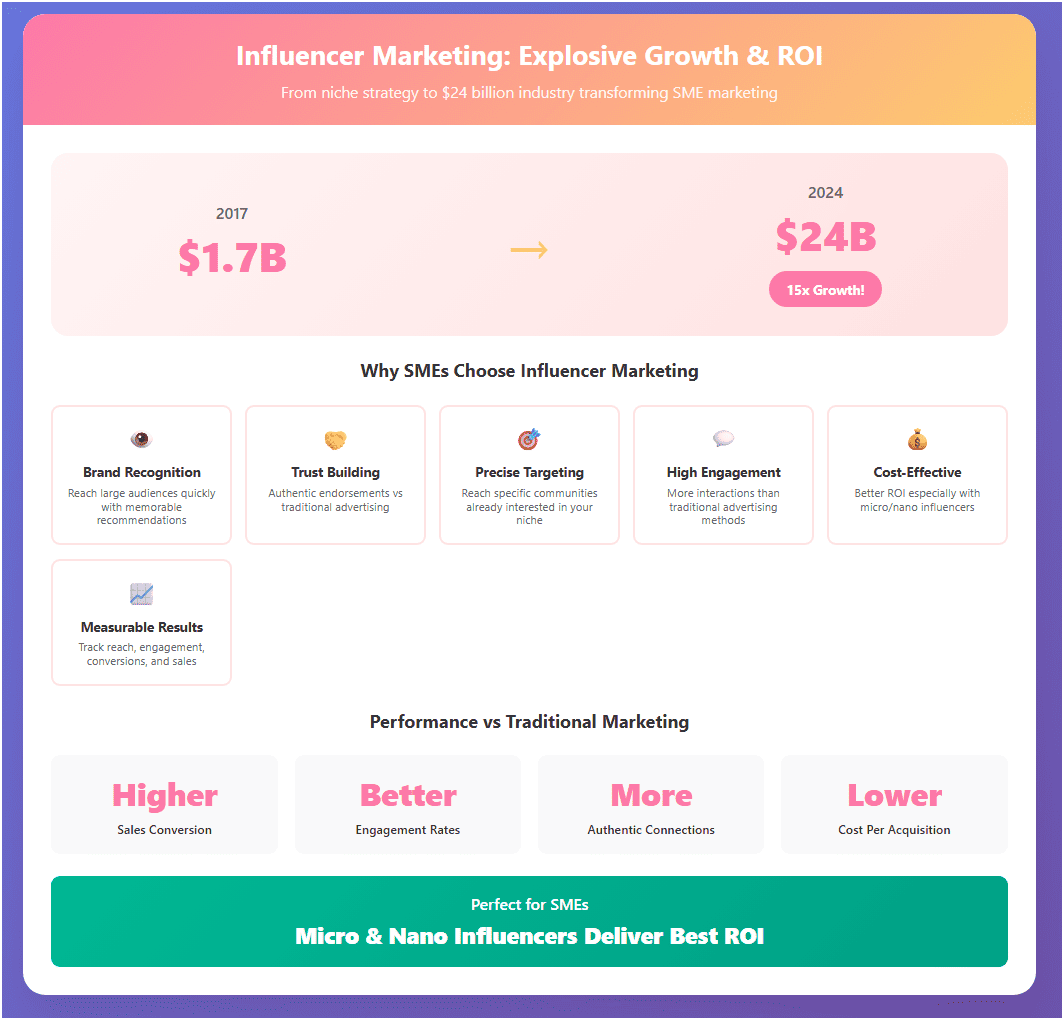
Small businesses have limited advertising possibilities, so influencer marketing allows them to quickly reach a large group of potential customers – even if they collaborate with someone who doesn’t have a huge reach but enjoys high engagement from their community. These types of recommendations are more memorable for audiences than typical advertising. Similar to content marketing, the key is creating valuable content that naturally promotes the brand.
Building Trust
Consumers often don’t trust traditional advertising. An influencer’s recommendation is perceived as more genuine. If an influencer recommends your product, audiences are more likely to trust them and try the recommended item. This is particularly important for small businesses building their position in the local market.
Reaching the Right Customer Group
Through influencer marketing, a company can precisely choose who it wants to address. Influencers operate in specific topics (fashion, cooking, sports, etc.), so their audiences are already interested in what the product or service is about. This allows you not to waste a budget on people who wouldn’t be interested anyway. Similar to keyword research, understanding your target group is fundamental for effective marketing activities.
More Interactions and Engagement
Influencers are excellent at encouraging their followers to discuss, comment, or share content. Thanks to them, a small company can count on more reactions than with regular advertising. Often such content is creative and better suited to the habits of users on a given platform.
Better Effectiveness Than Traditional Advertising
Research shows that influencer marketing delivers better results than traditional advertising. It provides higher sales and engagement because people more readily respond to recommendations from favorite creators than to classic advertising messages. It’s also a more cost-effective form of promotion – especially for small budgets.
Types of Influencers and Collaboration Methods for SMEs
Micro, Nano, or Macro – Which Influencer for Small Business?
Influencers are divided into several groups according to their follower count:
- Nano-influencers – up to 1,000 followers. Very dedicated community, high engagement.
- Micro-influencers – 1,000 to several tens of thousands of followers. Trust and close contact with fans are also strong here.
- Macro-influencers – tens of thousands to several million followers. Usually already known in wider circles, but collaboration with them is quite expensive.
- Celebrities – over one million followers. Huge reach, but effectiveness isn’t always the highest (low engagement).
For small and medium businesses, micro- and nano-influencers are a better choice because collaboration with them costs less and often delivers better results.
Most Popular Forms of Collaboration
- Barter – the company sends its product to an influencer for testing and hopes for a review or recommendation. Works well with beginning influencers.
- Paid posts or videos – the company pays an influencer to create and publish material advertising the product/service.
- Affiliate marketing – the influencer receives a commission for each sale or action performed by audiences who used their recommendation (e.g., through a special discount code).
- Ambassador programs – the influencer regularly promotes the brand over a longer period. Usually receives payment or products.
- Contests and giveaways – the influencer organizes contests where the prize is company products or services. This attracts new followers and gives a positive brand perception.
- Reviews – the influencer tests the product and shares their opinion on their profile.
How to Choose the Right Influencers?
Where to Look for Influencers?
The easiest way to start is by browsing your social media, following popular hashtags and thematic profiles. You can also use search engines and platforms such as BuzzSumo, HypeAuditor, Whitepress, and REACHaBLOGGER, where you can filter influencers by follower count, topic, content quality, or engagement.
A good way to find influencers is also checking who other brands collaborate with, looking at industry rankings, and checking Facebook discussion groups.
What to Pay Attention to When Choosing an Influencer?
- Brand alignment – Check if the influencer has similar values and aesthetics to your company.
- Appropriate audience – Make sure they’re followed by people you want to reach (it’s worth asking for demographic statistics of their community).
- Honesty and authenticity – Check if their posts are genuine, not exaggerated, and natural.
- Content quality – Are their photos/videos/posts attractive and generating reactions?
- Engagement – Follower count isn’t everything. Check how many likes, comments, shares they get on their content.
- Experience with other brands – Have they previously collaborated with other companies? How were these activities evaluated?
How to Check an Influencer’s Effectiveness?
Evaluate these 6 basic indicators before deciding on collaboration:
- Community engagement – number of reactions relative to follower count.
- Demographics and audience location – check age, gender, interests, and residence of fans.
- Reach and viewership – how many people see the influencer’s content?
- Publication frequency – does the influencer regularly publish new content?
- Comment quality – do real discussions appear under posts?
- Collaboration history – were other companies satisfied with the collaboration and are they willing to recommend them?
How to Check if the Community is Real?
- Check if comments are specific (don’t repeat the same phrases, aren’t in other languages, aren’t spam).
- Pay attention to rapid, unnatural increases in follower numbers (often means buying likes).
- Compare the number of reactions under posts to follower count – if it’s low, that’s a warning sign.
- Use tools like HypeAuditor or SocialBlade to check account authenticity.
- Review profiles of people commenting and liking – are they real users?
It’s better to choose a smaller but genuine influencer than someone with bought followers.
How to Start Collaboration with an Influencer?
How to Write to an Influencer?
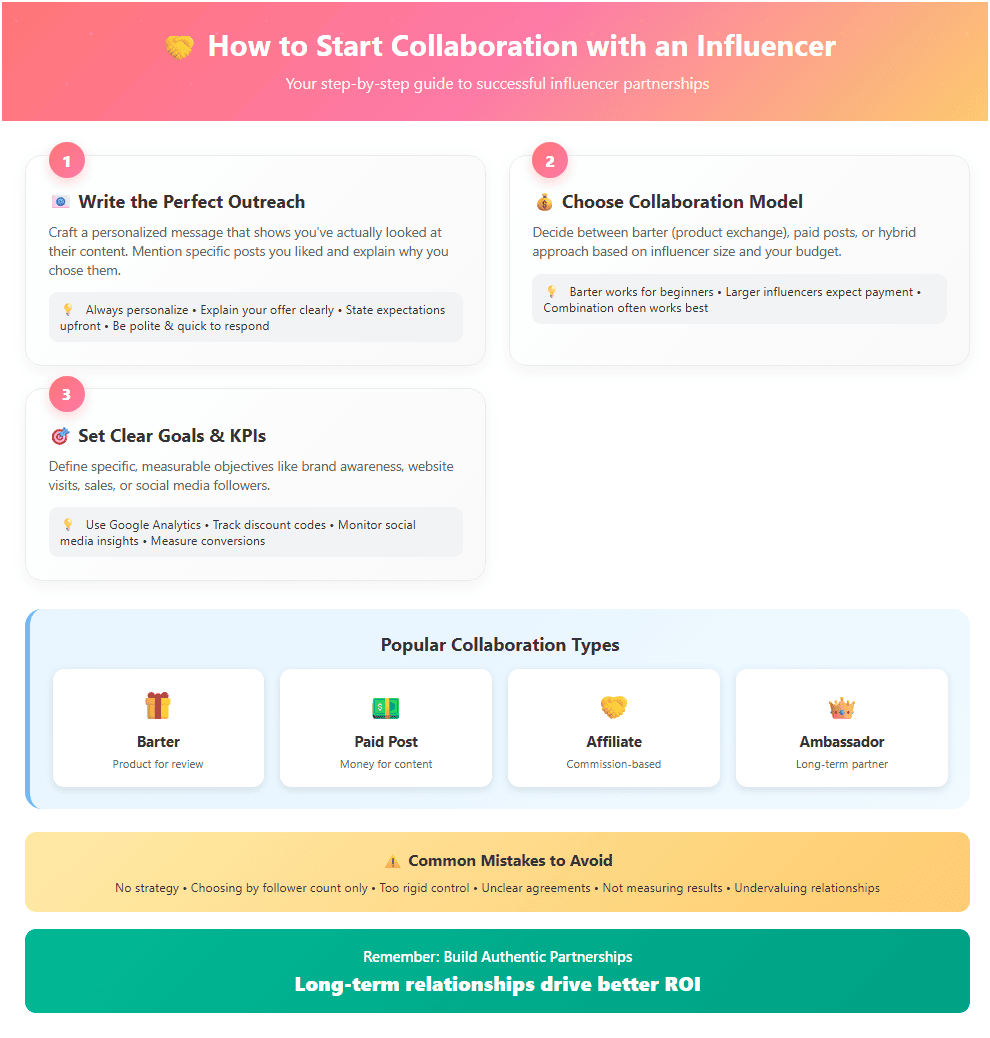
When you find the right person, it’s worth writing them a message. It should be individual, not copied to many people without changes. Always start with a few sentences about why you chose this particular person and what you like about their activity. Briefly introduce yourself and your company. It’s best to suggest a conversation where you can jointly establish collaboration details.
- Personalize the message, refer to specific influencer content.
- Explain what you can offer – interesting products, new content creation opportunities, payment.
- Clearly state what you expect: review, sponsored post, contest participation, etc.
- Write politely, follow good contact practices, and respond quickly to messages.
Barter or Paid Collaboration?
Always establish collaboration rules clearly and openly. You can choose a barter model (product for advertising) or propose monetary compensation – everything depends on the influencer’s size and both parties’ expectations.
- Barter is good for beginners if the influencer is starting out and enjoys testing new things.
- Larger influencers usually expect payment, and its amount depends on reach, platform, number of materials to create, etc.
- Often a combination of both models is used: product + payment.
It’s important that both parties feel appreciated and have clearly established collaboration conditions.
How to Set Campaign Goals and Check Results?
- Set specific goals, e.g., increased recognition, website visits, specific product sales, new social media followers, engagement level under posts, brand image improvement.
- Use data collection tools: Google Analytics (to track website traffic from campaigns), discount codes, social media statistics (e.g., Instagram Insights, YouTube Analytics), brand mention monitoring online.
- Systematically check: reach, view count, user activity, new sales.
Similar to SEO link building, regular results monitoring allows for activity optimization and better effects.
Most Common Small Business Mistakes
- Lack of strategy and goals – leads to money waste.
- Choosing influencers only by fan count – authenticity and community fit are very important.
- Not checking influencer history or reputation.
- Too rigid controls – if you impose an exact style on creators, content may seem inauthentic.
- Lack of clear financial agreements or about what the influencer should do.
- Not measuring campaign effects – you don’t know if activities bring results.
- Undervaluing the relationship with influencers – treating them only as advertising carriers, not partners.
- Too small budget – not everything can be arranged through barter, often even symbolic payment gives better results.
What Tools Can Help?
10 Useful Tools for Finding and Evaluating Influencers
- BuzzSumo – finding the best content and creators in your industry.
- HypeAuditor – authenticity analysis, detecting fake followers.
- Whitepress – Polish database of bloggers and influencers.
- REACHaBLOGGER – intermediary for contact with Polish influencers.
- Google Analytics – tracking website traffic from influencer campaigns.
- Instagram Insights/YouTube Analytics/Facebook Insights – statistics and audience data.
- SimilarWeb – website traffic analysis.
- Senuto/Semstorm – tools for analyzing influencer blog position in Google.
- Sotrender – social media activity analysis.
- Google – regular search engine – often the simplest solutions are most effective.
What and How to Measure During Campaigns?
- Reach – how many people saw your brand?
- Views – how many times did they see materials (even if the same person multiple times)?
- Engagement – likes, comments, shares, clicks.
- Website traffic – how many people came to your site after influencer recommendation?
- Conversions – how many people made purchases, registrations, or other important actions on the site?
- Brand mentions and opinions – do more positive opinions appear after the campaign?
- New followers – did you gain fans on Facebook or Instagram?
- Sales – how much did you manage to sell thanks to given activities?
Examples of Successful Campaigns
How Small Businesses Used Influencers?
Good examples are Polish parenting bloggers like Fit Matka Wariatka or Matka Prezesa, who help local companies reach parents by showing products in everyday situations. These creators’ recommendations are perceived as sincere and lead to increased sales.
Another example of a successful campaign was McDonald’s collaboration with young rapper bambi. The “bambi robi z Makiem, co chce” campaign included an original, limited-time offer, merchandise, and an artist concert on a restaurant roof, which resulted in multiplied app visits and sales growth.
Similar things happen with restaurants inviting food bloggers, boutiques collaborating with fashion bloggers, or service companies using expert recommendations on LinkedIn. This proves that a small company doesn’t need huge money to enter the market and gain customers – a well-chosen influencer and clear strategy are enough.
Best Advice for Small and Medium Businesses Starting Influencer Activities
6 Good Practices to Start
- Plan – define campaign goals, target audience, and budget before you start acting.
- Micro and nano are the best choice – they have dedicated, well-matched audiences and better influence results than macro-influencers.
- Check influencers thoroughly – don’t just count on numbers, look at activity, community authenticity, and brand fit.
- Focus on partnership – respect the influencer and let them work according to their ideas, as they best know their audience.
- Measure results – systematically check numbers, analyze effects, and adjust activities to results.
- Honesty and clear rules – always mark sponsored content and only collaborate with influencers who are open to transparency.
Similar to international SEO, influencer marketing requires a long-term approach and patience. Remember, this is a process requiring time and constant work. Results may not appear overnight. Most importantly, build long-term, authentic relationships – these help gain loyal customers and increase sales even in small businesses.