

Every day, more than 5.56 billion web users ask Google hundreds of millions of queries, searching for products, services and information. While most Internet users ignore paid ads and focus on organic results, only 0.63% of them go to the second page of search results. In practice, this means one thing – if your website is not in the TOP10 of Google, it probably remains invisible to potential customers. Page positioning is a process that can change that.
Google search engine optimization (SEO) is a comprehensive set of activities that affect your site’s visibility in search results. It is not a secret art or a one-time service, but a thoughtful, multi-step optimization process that requires both technical knowledge and an understanding of the current search engine algorithm rules.
In this article, we will show how SEO actually works and what elements have the greatest impact on your site’s position.
What’s really behind SEO
Search engine optimization (SEO) is the process of optimizing a website to increase its visibility in organic (unpaid) search results. Unlike Google Ads, SEO does not require a per-click fee, and the results – while slower to appear – are more lasting and cost-effective in the long run.
SEO isn’t just about fighting for top search engine positions, but more importantly about bringing your site up to current Google standards and requirements. The search engine’s algorithms are constantly evolving, and their goal is to provide users with the most valuable and responsive content.
Successful SEO is based on three pillars:
- Technical optimization of the site – ensures that search engines can effectively scan and index the content of the site
- Valuable content – responds to user queries and needs
- Building authority – by acquiring links from valuable external sites
Each of these elements is essential for achieving high rankings in Google, and ignoring any of them can significantly reduce the effectiveness of SEO efforts.
SEO in numbers
To better understand the scale and importance of SEO, it is worth looking at key industry data.
Google’s dominance in the market is undeniable – the search engine controls more than 89% of the global market, making it the undisputed leader.
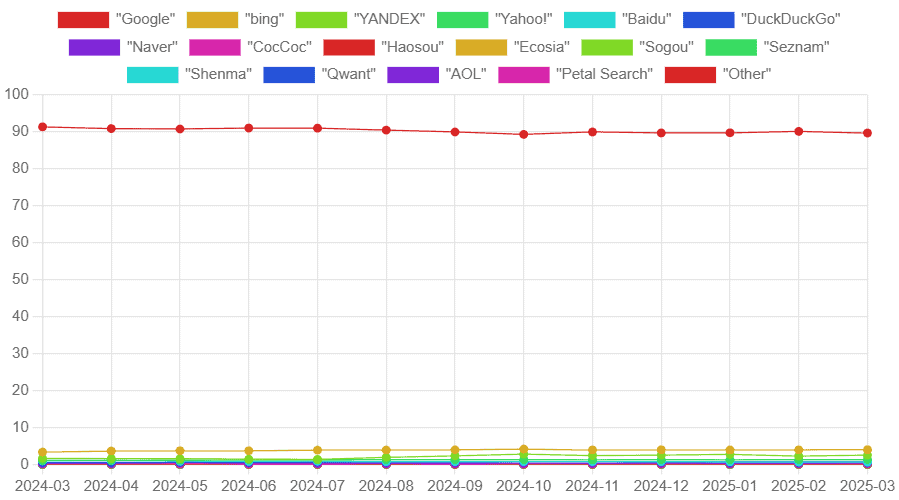
Moreover, Google is responsible for 57.8% of all internet traffic worldwide. These numbers clearly show why proper optimization for this particular search engine is so important.
At NON.agency, we believe that effective SEO is a data-driven process and an understanding of the unique needs of your business. Our SEO strategies combine technical know-how with thoughtful content marketing to deliver measurable results.
How Google’s search engine works – the basics of how the algorithm works
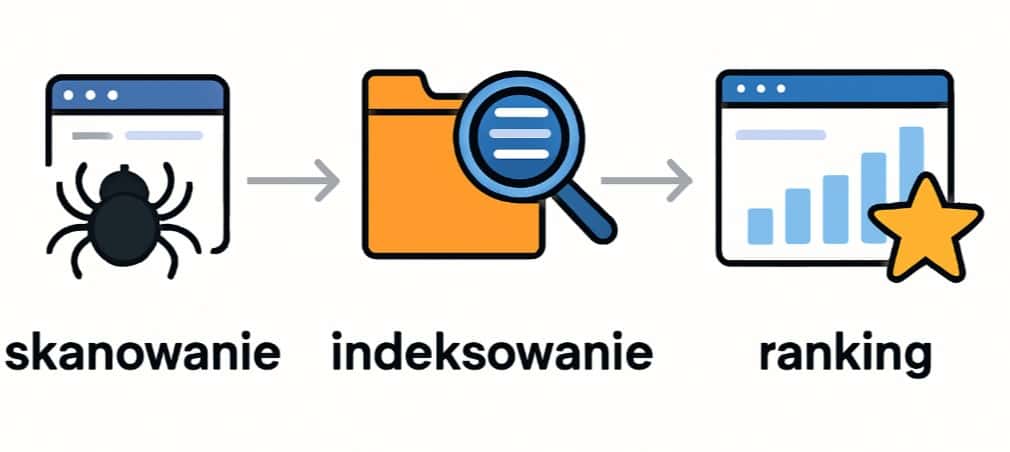
To understand how SEO works, it is first necessary to understand the mechanism of the Google search engine. The search process consists of three main stages:
1. scanning (Crawling)
Google’s robot (called Googlebot or crawler) systematically scours the Internet by visiting sites and following links. Its job is to discover new and updated websites.
Googlebot works similarly to a spider spinning a web – it moves through links between pages. In order for Google’s robot to reach your site:
- The site must be linked to other sites through links
- The navigation structure must be clear and logical
- The site code should be optimized and free of errors
If Google’s robot can’t find or visit your site, it won’t show up in search results – regardless of the quality of the content or other factors.
2 Indexing (Indexing)
Indexing is the process by which Google analyzes and interprets the content of discovered pages to understand their subject matter and context.
During indexing, Google processes:
- Textual content
- Images and multimedia (thanks to alt tags, captions)
- Metadata (titles, descriptions, headings)
- Structure of the site and its hierarchy
- Internal and external links
The indexed information goes into Google’s huge database, which acts like a library catalog, allowing you to quickly find relevant content for any query.
3. ranking of results (Ranking)
When a user types in a query, Google searches its index to find the most relevant pages. The algorithm uses more than 200 ranking factors to determine which pages are best suited to the user’s query and in what order they should be displayed.
Key ranking factors include:
- Relevance of content to the query
- Quality and uniqueness of content
- User experience (UX) and page loading speed
- Optimization for mobile devices
- Domain and page authority (partly built by external links)
- E-E-A-T (Experience, Expertise, Authoritativeness, Trustworthiness) signals.
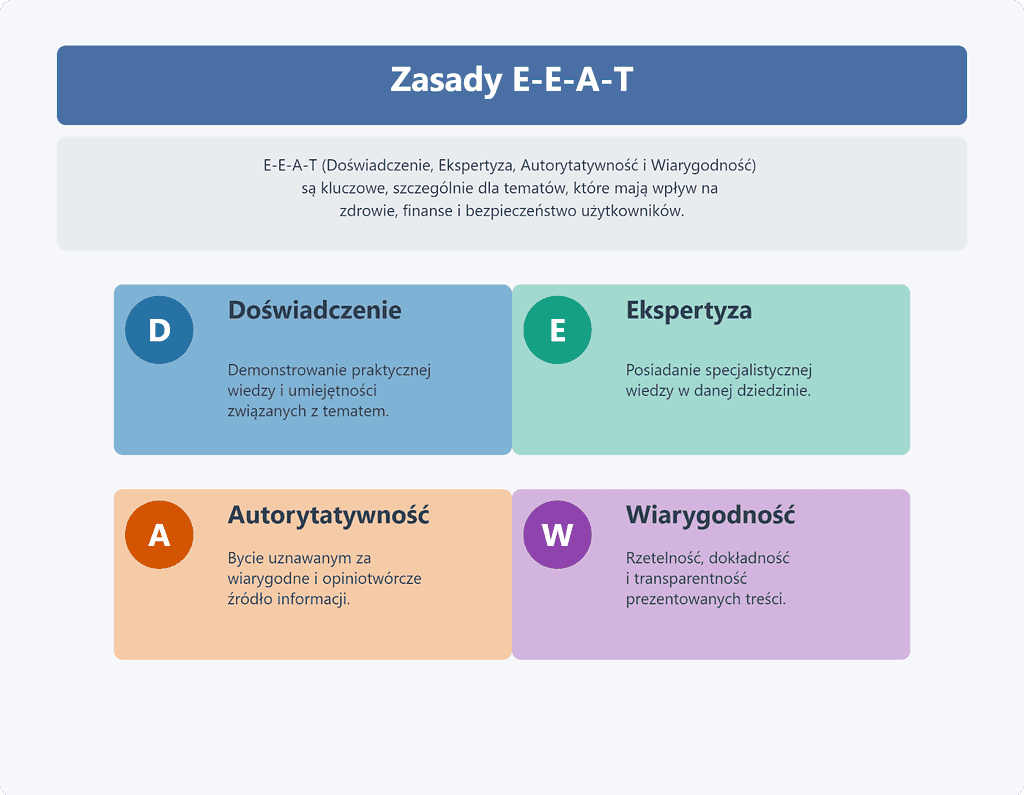
It is worth noting that Google is constantly improving its algorithm. In 2023 alone, more than 800 updates have been made, including several major changes affecting search results. Successful SEO, therefore, requires constant attention to changes and adjustments to SEO strategies.
| Stage | Purpose | Key elements |
|---|---|---|
| Scanning | Site discovery | Link structure, site map, no blocking in robots.txt |
| Indexing | Understanding content | Content, metadata, structure, multimedia |
| Serialization | Value assessment | Relevance, quality, UX, authority, E-E-A-T |
The most important factors affecting the position of a page in Google

Although Google does not publish a complete list of ranking factors, years of experience of SEO specialists have identified the most important ones. Let’s take a look at the elements that have the greatest impact on a site’s position in search results.
Content tailored to user intent
Today’s Google algorithms are able to interpret not only keywords, but also the context and intent behind the query. Content that best addresses the user’s needs has the best chance of ranking high.
Key aspects of content optimization:
- Content value – content should be complete, up-to-date and provide specific answers to users’ questions
- Naturalness – instead of artificially stuffing keywords, write first and foremost for people
- Comprehensiveness – it is worth creating content that covers the topic holistically, answering related questions
- Uniqueness – content should bring new value, not duplicate what already exists online
User experience (UX) and technical aspects of the site
Google is paying more and more attention to how users experience a site. Sites that provide a positive experience are rewarded with higher rankings.
Key UX and technical factors:
- Page loading speed – slow sites are negatively rated by both users and the algorithm
- Responsiveness – the site must work well on all devices, especially mobile ones
- Core Web Vitals – Metrics that measure stability, interactivity and page load speed
- Clear structure – clear content hierarchy with appropriately used headings (H1-H6)
- Friendly URLs – page addresses should be short, descriptive and include keywords
- Security – SSL certificate and HTTPS are the security standard.
An important part of the technical aspects is also the correct implementation of meta tags:
- Title tag – the most important element of on-page SEO, should contain the main keyword, preferably at the beginning
- Meta description – although it does not directly affect ranking, a well-written description increases CTR
- Structural markup (schema.org) – helps Google understand the context of the page and can generate extended results
Internal linking and site structure
The way pages are linked together within a site is of great importance for SEO. Good internal linking helps Google understand the structure and hierarchy of content.
Elements of effective internal linking:
- Logical hierarchy – from the home page, to categories, to detailed sub-pages
- Anchor texts (anchor texts) – should naturally contain keywords
- Page depth – key subpages should not be buried deep in the structure (preferably up to 3-4 clicks from the main page)
- Thematic consistency – linking between thematically related content builds context
A well-designed site structure resembles an inverted pyramid or tree, with clearly defined categories and subcategories, making it easier for both users and Google’s robots to navigate the site.
Domain authority and external link profile
Links from other sites act as votes of confidence in Google’s eyes. The more valuable pages linking to your site, the more authority it gains in the eyes of the search engine.
Key aspects of building a link profile:
- Quality over quantity – one link from a reputable site can be worth more than hundreds from insignificant sites
- Naturalness – the link profile should grow organically, without sudden spikes
- Diversity – links should come from a variety of sources and domains
- Topic matching – links from sites with related topics are most valuable
- Anchor texts – excessive use of the same anchor texts with keywords can look unnatural
It is worth remembering that building a link profile is a process that takes time and patience. Artificial methods of link acquisition can lead to penalties from Google.
At NON.agency, we specialize in strategic link building that builds lasting authority for your domain. We create valuable content that naturally attracts links, backed by a thoughtful link acquisition strategy from reputable sources.
Comprehensive step-by-step website positioning process
Effective SEO for a website on Google is a thoughtful, multi-step process. Here’s a comprehensive approach to SEO that yields the best results.
1. keyword and competitive analysis
The first step in SEO is to thoroughly research key phrases and analyze the competition. This step forms the foundation of the entire SEO strategy.
The keyword analysis process includes:
- Brainstorming – writing down all possible phrases related to your business
- Competitor research – check what phrases your competitors are positioning for
- Using tools (e.g., Google Keyword Planner, Ahrefs, Senuto) to uncover new opportunities
- Search intent analysis – understanding exactly what users typing in given phrases are looking for
- Segregate keywords by potential, competitiveness and intent
The result of this phase should be a comprehensive list of key phrases, grouped by intent and priority, which will serve as a map for further activities.
2. SEO audit and technical optimization
The next step is to technically audit the site and implement the necessary optimizations. At this stage, we remove obstacles that may hinder Google robots from scanning and indexing the site.
Key elements of an SEO technical audit:
- Indexation check (via Google Search Console)
- Analysis of server errors and redirections
- Evaluation of page loading speed
- Mobile responsiveness verification
- Control of content duplication and canonicalization
- Analysis of meta tags and URL structure
- Checking the site map and robots.txt file
Once problems are identified, there is a phase of implementing fixes that will provide a solid technical basis for further positioning activities.
3. optimize the content and structure of the site
At this stage, we optimize existing content and develop the structure of the site according to previously identified key phrases and user intent.
The content optimization process includes:
- Updating page titles (title tags) and meta descriptions
- Improving H1-H6 headings
- Expand content with missing information and context
- Optimization of images (file names, alt tags)
- Implementation of structured data (schema.org)
- Create new subpages for topics not yet covered
- Internal linking development
Each keyword phrase with a unique intent should have a dedicated, optimized subpage. This avoids keyword cannibalization and accurately addresses different user needs.
4. creating valuable content
Content marketing is an integral part of successful SEO. At this stage, we create new, valuable content that:
- Respond to user questions and needs
- Cover comprehensively topics related to your business
- Build authority in a particular industry
- Attract natural links and shares
- Engage users and encourage them to stay longer on the site
An effective content strategy includes a variety of content formats:
- Extensive guide articles (evergreen content)
- Industry news
- Case studies
- Infographics and visuals
- Videos
- Podcasts
It’s worth remembering that content should be updated regularly to stay relevant and respond to users’ changing needs.
5. building an external link profile
The last but extremely important step is to strategically build an external link profile (link building). As mentioned earlier, links from other sites are one of the most important ranking factors.
Effective methods of acquiring valuable links:
- Create valuable content that naturally attracts links (known as linkable assets)
- Collaboration with influencers and industry experts
- Guest blogging – publishing guest articles on industry portals
- Appearing as an expert in interviews and podcasts
- Sponsored articles (with appropriate nofollow/sponsored labeling)
- Building business relationships that can lead to natural mentions
- Repairing lost links (broken link building)
The key here is quality and naturalness – link building should be a gradual process, based on value and relationship building, not quick fixes.
6. monitoring, analysis and optimization
Website positioning is an ongoing process, requiring regular monitoring of results and adjustment of strategies. The key to long-term success is data analysis and continuous optimization.
Elements of effective SEO monitoring:
- Tracking positions for key phrases
- Organic traffic analysis (via Google Analytics)
- Monitoring errors and problems in Google Search Console
- Study of user behavior on the site
- Track conversion and achievement of business goals
- Analysis of competitors and their activities
- Adapting strategies to Google algorithm changes
Regular analysis identifies both areas in need of improvement and those that are yielding the best results, enabling efficient allocation of resources.
When can you expect positioning results?
One of the most frequently asked questions about SEO is: “When will I see results?”. It’s an understandable question, but the answer is not simple, as many factors affect the rate of results.
Website positioning is not a sprint, but a marathon. It requires patience, consistency and long-term commitment. Here’s a realistic timeframe for SEO results:
Realistic timeframe
- 1-3 months: Initial changes in indexing, improved visibility for low-competitive long tail phrases, first technical optimizations
- 3-6 months: Noticeable increase in organic traffic, improved positions for medium competitive phrases, first effects of content marketing
- 6-12 months: Significant improvement in positions for competitive phrases, marked increase in organic traffic and conversions, building domain authority
- 12+ months: Stable position in TOP10 for major industry phrases, steady increase in traffic and conversions, snowball effect (each new content achieves results faster)
According to Ahrefs, almost 60% of the pages in Google’s TOP10 are at least 3 years old – this shows that building authority takes time and consistency.
Factors affecting the rate of achievement of results
It is worth remembering that the rate of achievement depends on many factors:
- Competitiveness of the industry – in some niches you will see results after a few months, in others (e.g. finance, insurance) it can take years
- Age and domain authority – new sites must first build trust with Google, which prolongs the process
- Site baseline – sites with technical problems or penalties from Google will need more time
- Intensity of SEO efforts – consistent, regular efforts yield faster results than sporadic efforts
- Budget – more resources allow for more intensive activities in many areas at the same time
- Quality of implementations – professionally conducted optimizations bring faster and more lasting results
The first signs of improvement are often seen much earlier than the full business effects. After just a few weeks you may see better indexing, after a few months an increase in traffic from long tail phrases, and only after a longer period of time a significant increase in conversions and revenue.
The most common mistakes in website positioning
Learning about common SEO mistakes is as important as knowing good practices. Here are the three most serious mistakes to avoid in the SEO process.
Focusing solely on keywords at the expense of user intent
One of the most common mistakes is over-focusing on specific key phrases without understanding the real needs and intentions of users. Today’s Google algorithms are sophisticated enough to recognize whether content actually answers a user’s question or merely contains target keywords.
Symptoms of this error:
- Artificial stuffing of keywords in the content (keyword stuffing)
- Create separate subpages for very similar phrases (e.g., “sports shoes warszawa” and “running shoes warszawa”).
- Ignoring context and related topics
- Focusing on the volume of content at the expense of its quality and usability
Instead, it makes sense to focus on comprehensive topic coverage that will naturally include different variations of key phrases and answer related questions. Google places a premium on sites that provide comprehensive answers, rather than those that are optimized for specific phrases.
Ignoring technical and user experience aspects
Even the best content won’t work if the site has serious technical problems or offers a poor user experience. Google is paying more and more attention to how users interact with the site.
Typical technical and UX issues affecting SEO:
- Slow page loading (more than 3 seconds)
- Poor mobile optimization
- Indexation problems (e.g., robots being blocked by invalid robots.txt)
- Complicated navigation and site structure
- Intrusive ads and pop-ups
- Incorrect redirects and 404 errors
- No SSL certificate
Regular technical audits and UX testing are essential to identify and fix these issues before they negatively affect search engine positions. It’s worth remembering that Google uses actual user behavior data as ranking factors – high rejection rates and short time spent on a page can negatively affect positions.
Impatience and inconsistency in SEO efforts
SEO takes time and systematic efforts. One of the most serious mistakes is expecting immediate results and abandoning actions when they do not appear immediately.
Symptoms of this approach:
- Frequent changes of strategy without giving time for the previous one to work
- Undertaking risky, “fast” positioning techniques
- Irregular content updates
- Lack of consistency in building a link profile
- Abandonment of monitoring and analysis of results
Successful SEO requires patience and a consistent approach. Even if the first significant results appear after a few months, the long-term benefits are enormous. It is worth remembering that SEO is an investment, not a cost – every action builds a foundation for future results.
How to measure the effectiveness of SEO efforts
Page positioning, like any marketing activity, should be measured and analyzed. Only then is it possible to determine the effectiveness of the actions taken and optimize them. Here are the key indicators worth tracking.
Key performance indicators (KPIs) in SEO.
- Positions in search results – the primary but not the only indicator; it is important to track positions for many phrases, not just a few main ones
- Organic visibility – the percentage of clicks you can theoretically receive based on your positions, a good indicator of overall SEO health
- Organic traffic – the number of users visiting the site from free search results
- CTR (Click-Through Rate) – the percentage of users who click on a result after seeing it in a search engine
- Conversion rate from organic traffic – the percentage of users from organic traffic who complete goals (purchase, contact, sign-up)
- Rejection rate – the percentage of users who leave the site after visiting only one subpage
- Time spent on the site – the average time users spend on each subpage
- Indexation – the number of pages indexed by Google
- Link profile – the number and quality of links leading to the site
Tools for monitoring the effects of positioning
Effective SEO monitoring requires the right tools:
- Google Search Console – a free Google tool that provides information about how the search engine sees your site; it shows views, clicks, CTR, average positions and indexing problems
- Google Analytics – enables analysis of organic traffic, user behavior and conversions
- Position tracking tools – Ahrefs, SEMrush, Senuto – allow you to monitor positions for hundreds of key phrases
Website positioning – by yourself or with an SEO agency?
Entrepreneurs are often faced with the choice of whether to position the site themselves or outsource the task to specialists. Both options have their advantages and disadvantages, which are worth considering.
Standalone website positioning
Self-positioning can be a good option for small businesses with limited budgets or for people who want to learn new skills.
Advantages:
- Lower financial costs (although higher time costs)
- Full control over all activities
- In-depth knowledge of your own business and industry
- Ability to gradually implement changes at your own pace
- Developing valuable marketing skills
Disadvantages:
- Requires a significant investment of time to learn and implement
- Lack of experience can lead to costly mistakes
- Limited access to professional tools and data
- Difficulty in maintaining regularity of activities with other business responsibilities
- Less effective in competitive industries
If you decide to do SEO on your own, it’s worth it:
- Invest in education (courses, books, webinars)
- Use free tools (Google Search Console, Google Analytics)
- Focus first on basic technical optimizations
- Regularly create valuable content that responds to user needs
- Consider consulting a specialist at key moments (e.g., when auditing)
Cooperation with an SEO agency
Working with a professional SEO agency is usually more effective, especially in competitive industries or when you want faster results.
Advantages:
- Access to the knowledge and experience of specialists
- Use of advanced tools and data
- Saving the business owner time
- Comprehensive approach to all aspects of SEO
- Greater efficiency in competitive industries
- Achieve results faster with proven methods
Disadvantages:
- Higher financial costs
- The risk of ending up with an unreliable agency
- Less control over implementation details
- The need for communication and cooperation (this is not an “order and forget” service)
- Possible mismatch between agency goals and business objectives
When choosing an SEO agency, it is worth paying attention to:
- Transparency in communication and reporting
- Realistic case studies and customer testimonials
- Approach to targets and KPIs (whether they focus on items or business outcomes)
- Working methodology and positioning process
- Experience in your industry
Whichever path you choose, it’s worth remembering that effective SEO takes commitment and time. Even when working with an agency, your knowledge of the business and industry is essential to developing an effective SEO strategy.
At NON.agency, we believe in a partnership approach with our clients. Instead of acting in isolation from your business, we work with you to understand the unique needs and goals of your business. Our SEO efforts are always transparent and focused on real business results.
Contact us to learn how we can support your business in a competitive online environment.
Summary – how to effectively position a website on Google?
Website positioning is a complex, multi-step process that requires both technical knowledge and strategic thinking. The key to success is understanding how Google’s search engine works and how to meet the expectations of both the algorithm and users.
Effective SEO is based on several fundamental principles:
- Understand the user – know the needs and intentions of people who are looking for products or services similar to yours. Create content that answers their questions and solves their problems.
- A solid technical foundation – make sure your site is fast, responsive, properly indexed by Google, with a clear structure and navigation.
- Valuable content – create unique, comprehensive materials that provide real value. Quality always wins over quantity.
- Strategic approach – instead of haphazard actions, develop a well-thought-out SEO strategy based on analysis of keywords, competition and business goals.
- Patience and consistency – positioning is a marathon, not a sprint. Regular, consistent action yields better results than sporadic spurts.
- Monitoring and analysis – track the effects of your actions, draw conclusions and optimize your strategy based on the data.
- Adapt to change – Google’s algorithms and user behavior are constantly evolving. Stay on top of trends and adapt your efforts.
Website positioning is an investment, not a cost. Although it takes time and resources, well-planned and consistently executed SEO can bring stable, long-term business benefits that cannot be achieved through any other marketing channel. As you build domain authority and gain high positions in search results, each subsequent action becomes more effective, creating a positive upward spiral.
Remember, there are no shortcuts or magic tricks that will ensure sustained high rankings in Google. Successful SEO is based on providing real value to users and building authority in an ethical manner that complies with search engine guidelines.