International SEO / USA

SEO for the US Market: Google.com, Bing and AI Answers

The US market requires a unique approach. Simply translating your website isn't enough to secure more traffic or increase your revenue.

We help European e-commerce and SaaS companies get over the hump and gain visibility in the crowded USA market. We'll help you challenge the biggest competitors in your niche — in Google, Bing, and AI answers.

US search market share StatCounter, May 2026
85.5%
Google
9.7%
Bing — US is the only market where it's worth counting it separately
25.8%
of searches carry AI Overviews
−38%
fewer clicks where they appear
$1,500
entry budget / month
From $1,500 / month Let’s talk

Many brands make the same mistake — they copy what worked in the European market and follow the same blueprint when expanding into the United States. Then, they wonder what's the problem: the content, the links, or the domain.

Usually, it's all three. Below, we share what works in the US market and which elements you need to get right first.

Book a free consultation
Key takeaways
  • Entering the US is not a translation project. American English uses different product vocabulary from British English.
  • A /us/ subfolder usually beats a new domain. You do not need a US entity to rank or sell.
  • AI visibility is a “new layer” of online visibility. Its impact is felt most in the US.
What works for every market

What Actually Transfers When You Expand Into the US

Many people make hasty assumptions about what carries over from a successful European site. Sometimes, they are correct. Unfortunately, most of the time they're not.

The technical phase is short and comparatively cheap. The content and link phases run long. Agencies that quote a flat monthly fee across all three tend to underdeliver on the third.

The most common mistake

Translating the content isn't enough. Translation carries meaning, but it doesn't answer the query. Localization makes your content not only understandable but also accurate.

Below, we present how much of what you built in Europe survives the move to the US.

AssetTransfers?Why
Technical foundationAlmost fullySite architecture, speed work and schema are market-agnostic
Brand and product dataYesFeeds, structured data and imagery need localising, not rebuilding
Content and keywordsNoDifferent vocabulary, different query patterns, different intent mix
Link profileNoEuropean referring domains carry little weight on competitive US SERPs
Domain authorityPartiallyHelps, but does not close the gap against established US competitors
Search engine mixNoBing holds 9.7% in the US and feeds ChatGPT — worth counting separately
Order of decisions

E-Commerce Expansion Into the US — The Order of Decisions

The first few decisions you make are more difficult (and more expensive) to fix later on. Because of that, the order of actions matters more than speed.

Measurement

We base our decisions on the country filter in Search Console’s Performance report. We measure revenue from US traffic, not the number of sessions.

01

Domain structure

A subfolder such as /us/ on your existing domain is the best option if that domain already has authority. A separate .com site makes sense when the US brand or catalogue diverges significantly from your existing domain. A separate .us domain is rarely a good choice.

02

Hreflang

If you run British and American versions side by side, en-GB and en-US decide which one Google shows to whom. Without them the engine chooses for itself, and it frequently chooses wrong. See Google’s documentation.

03

Category structure

An American category tree should be based on American queries, not a translation of your European site. This is where most migrations quietly lose their traffic.

04

American English content

You need content written specifically for the US, not merely translated from another language. For large catalogues, we use AI under human supervision to get it right — otherwise, the cost of creating content would skyrocket.

05

US link building

You need to target publications on American domains and build your anchors around American phrasing.

06

Measurement

We measure the campaign's performance using the Performance report with a country filter. We look at the revenue from the US market, not the number of sessions.

Case study · US market

Racing apparel, US market

topracingshop.com was moving to a new store version and needed its SEO restructured while scaling content at the same time. We handled the migration, then product, category and blog content produced with AI under human editorial control.

+187%
visits
+209%
impressions
Read the case study
“NON.agency helped us organise SEO for the new version of the store and take a sensible approach to scaling content, including using AI for product, category and blog descriptions. The collaboration was concrete, efficient and simply well run. We saw a clear increase in visibility and traffic.”
Andrzej Król · founder, topracingshop.com
AI visibility

Brand Mentions in AI Answers — What Makes Them Valuable?

GEO is the process of optimization for AI-generated answers: AI Overviews and AI Mode in Google, ChatGPT, Perplexity, Gemini, and many more. High ranking in SERPs doesn't guarantee getting mentioned by AI.

Let's focus on hard data to debunk two popular myths. The first myth is that AI “killed” organic search. The second is that AI optimization isn't needed at all. In both cases, the information we have tells a different story.

How it works

A language model receives a query, breaks it into a dozen or so sub-queries, researches them in parallel, and builds one cohesive answer based on the gathered information. Your webpage can be the source of this information and get cited or stay unmentioned — regardless of your page's position in SERPs.

The traffic AI sends you
0.91%

ChatGPT accounted for 0.91% of search referrals in July 2026, against Google’s 88% (Cloudflare Radar). It is the fastest-growing referral source on the web and still under one percent.

The traffic AI takes from you
−38%

All AI tools combined took 3.2% of US desktop searches in Q4 2025, with Google at 73.7% (Datos and SparkToro). AI Overviews appeared in roughly 25.8% of Google searches by late 2025, and a randomised 2026 field experiment measured a 38% drop in clicks on the queries where they appeared.

AI answers likely won't bring more users to your website, but they are already affecting your organic traffic. If you ignore them, you'll lose your traffic and gain nothing in return. Your brand's name appearing in AI-generated content is an opportunity to increase your visibility in a new sales channel.

Missing this opportunity is especially painful for e-commerce sites because AI answers start to dominate comparison and product-research queries. A buyer who used to click through a list of URLs provided by Google now asks AI for recommendations and receives a custom-built list. If your brand is not on it, you lose visibility and traffic.

Here are four pillars of our approach to building visibility in AI:

Structure for extraction

We provide sections in the text that AI can easily cite without reading the rest of the page.

Entity density

Every text features named tools, dates, figures, and standards. LLMs like to cite specifics.

Answer first

44.2% of citations in ChatGPT come from the first 30% of a page (Search Engine Land, February 2026). After that, the curve falls off a cliff.

Measurement

We track for which questions your brand shows up in AI answers. Learn more: AI SEO →

First 90 days

The First 90 Days

1234day 1day 90
  1. 1Discovery + first fixes
  2. 2Full implementation
  3. 3Links, PR and content
  4. 4Retrospective
Lead time

Analyses that take weeks by hand, we run in days. We cut non-value added time to a minimum. The site's audit and the most important fixes are delivered during the first month of cooperation.

First movement in traffic usually shows around month four. We do not promise reaching certain positions in rankings because no one honest can guarantee that.

Weeks 1–4

Discovery + implementation

Our SEO audit and strategy service encompasses the entirety of your website: technical nuances, URL structure, brand mentions in AI, blog content, keywords, and competitors. Afterwards, you receive a plan.

Without a well-prepared Discovery, there's no effective strategy. We follow this rule in every project.

Weeks 3–8

Technical implementation and first content

We take care of elements such as Hreflang attribute, category structure, and Core Web Vitals. We audit Hreflang with a crawler, since Search Console stopped reporting its errors in September 2022. At the same time, we start generating content for your site.

From week 6

Link building

Our international link building is based on building lasting relationships with publishers, not buying links from random sources. We use our unique Sniper Method™ to prepare a Link Requirement Plan for your domain — how many links you need, from which sites, and at what pace. The links we provide are maintained for a minimum of twelve months.

Budget

Cost of Our US SEO Service

Entry point

from$1,500/ month

Not a fixed price.

After the audit, we'll determine together what fits into your budget. We'll suggest only those actions that can actually move the needle. If we determine that expanding into this market can't be done within your means, we will say so.

What determines the price

Niche competitiveness

Niches like supplements, finance, and legal services require a bigger budget than other, more general e-commerce sites.

Starting domain

A fresh domain with no history requires a different approach than an established European brand expanding into a new market.

Distance to competitors

The bigger the gap to competitors, the more challenging it is to overcome them.

Technical decisions

Technical Decisions for the US Market

Many guides still recommend setting a target country in Google Search Console. Google retired that option on 22 September 2022. Instead, focus on selecting the right domain, Hreflang, server location, and localized content.

QuestionRecommendationWhen to choose differently
Which domain should you choose?.comKeep your existing domain and use /us/ if the domain already has strong SEO authority
Should you use .us?Usually noOnly if the business is focused exclusively on the U.S. market
Should you create a separate U.S. version?Yes, if the offer or content differs from other marketsOne English version is enough if the content is genuinely the same across markets
Should you implement hreflang?Yes, if you have multiple regional English versionsNo, if you only have one English-language version
How should you host the site?Use a CDN with strong U.S. coverageThe physical server location is less important when using a modern CDN
How should you write the content?Use American EnglishAlso localize currency, units of measurement, date formats, and terminology

SaaS and B2B Entering the US

In SaaS and B2B, the buying cycle is longer. Therefore, content on these sites doesn't “sell” immediately. Instead, it should systematically improve brand awareness.

In practice, that means comparison and problem-led content outranks product content in value for B2B sites. Similarly, links from American domains are much more valuable than links from other sites.

Learn more about SEO for B2B →

SaaS · dedicated outreach campaign

~500 → 4 500+

clicks per day through a dedicated outreach campaign.

Read the SaaS case study
Evidence

Evidence From the US Market

CBD / Hemp, US

From startup to four stores

+1,100%
traffic
+2,250%
orders (from ~20 to 450+ / month)

“When it comes to digital marketing, the only real success we’ve had is with the team at NON.agency. In the past they grew our monthly sales to $30,000, and when we moved to another company our results essentially collapsed. We came back because they’re more than marketers; they’re developers who genuinely understand the technical side of SEO.”

Buck DeVan · founder, Circle Organics and CharmCityHemp

Sustainability, US and global · programmatic SEO
+1,375%
traffic in nine months
37×
revenue growth

The project started in April 2023. By month four we had published 1,200 pages built on programmatic SEO and AI, while building a link profile from niche domains including Earth.Org. The site came through the Helpful Content Update without a drop.

Fashion accessories manufacturer · San Diego

“The team is able to react and deliver great results quickly.”

Director of eCommerce · verified Clutch review, 18 February 2025

Read the full case study
Team

Why NON.agency

The founders of NON.agency (Raf and Rad) have worked in SEO for over 15 years. They've spent a large portion of this time working with US companies in niches like CBD, apparel, sustainability, and SaaS.

Our technical work is led by Rad Paluszak. CTO and co-founder of NON.agency, Rad has been in SEO since 2010 and has over twenty years in web development. Before NON.agency, he was the Director of SEO and then CTO at SUSO Digital in London, and Head of SEO at Neadoo Digital.

Rad worked on Matt Diggity’s The Search Initiative and Matthew Woodward’s Search Logistics, both built around the US market. He's a BrightonSEO speaker, contributor to Majestic’s “SEO in 2024”, and author of articles published on Semrush.

Day-to-day SEO operations are handled by Krzysztof Kilewski. Krzysztof is the Head of SEO and our long-time associate. He has spent close to twelve years in the industry and has completed projects for some of the largest brands on the market.

If you have any questions during our cooperation, they will go straight to the specialist running your project. There is no account management layer in between.

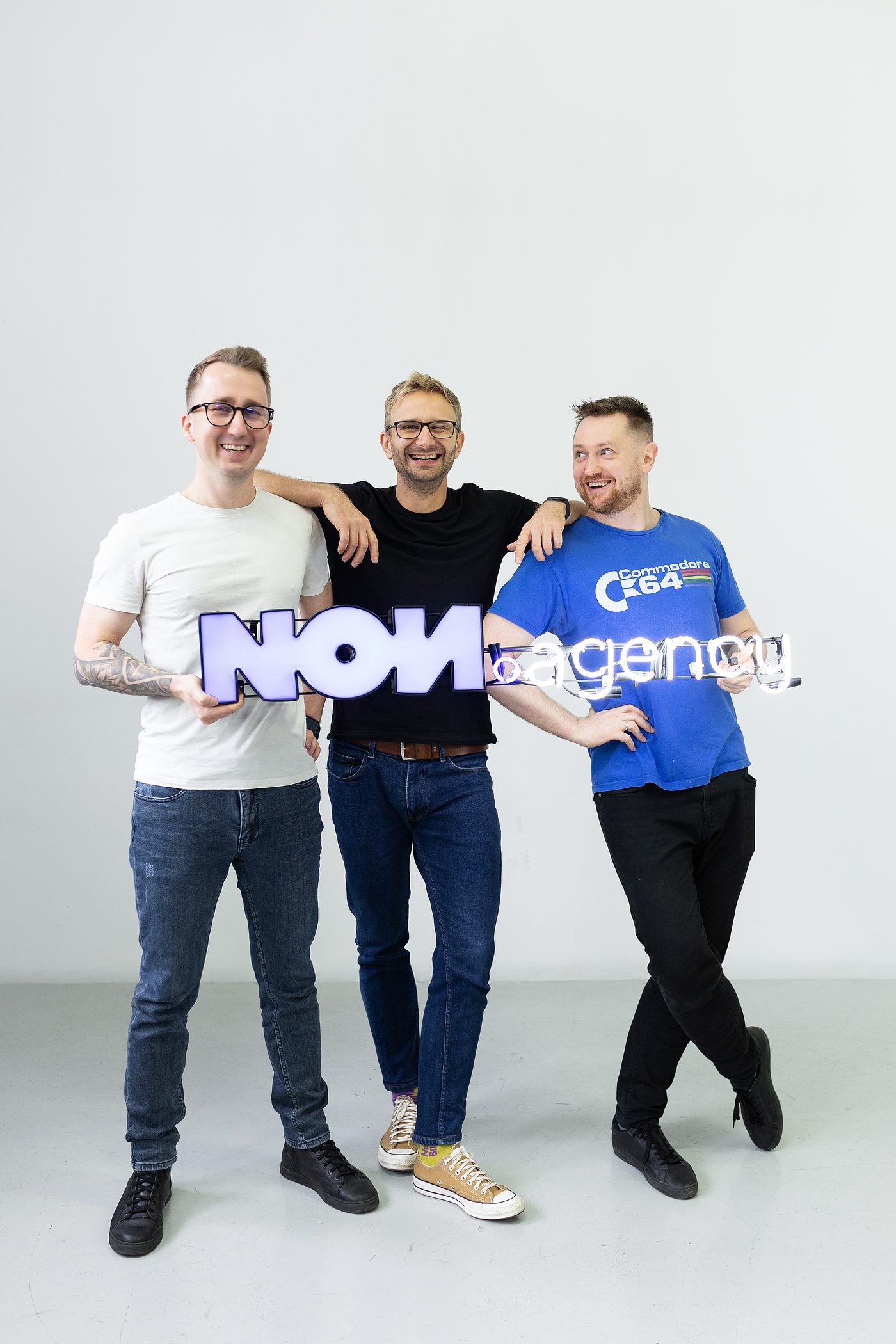
Krzysztof Kilewski, Rafał Moszkowców and Rad Paluszak — NON.agency
Krzysztof Kilewski, Rafał Moszkowców and Rad Paluszak — NON.agency.
Krzysztof Kilewski
Head of SEO, partner
LinkedIn
Rafał Moszkowców
Co-founder & CEO
LinkedIn
Rad Paluszak
Co-founder & CTO
LinkedIn

The project is run by a team of SEO, content and link-building specialists — meet the whole team →

How we work

We don't sell one-size-fits-all packages

You'll receive a personalized offer based on findings in our audit. The offer will include only those actions that will move your project forward.

We focus on scalability

Using intelligent automation, we deliver better results than companies with higher headcounts than ours.

We are transparent

You'll always be informed about the changes we make and have a real impact on the shape of our collaboration.

We work across a dozen-plus markets from offices in London and Poznań — see the full international SEO offering.

To be successful, expansion into the US market cannot be based on simply translating the site and buying more links. Competition on Google.com is global rather than national, and AI-generated answers intercept a meaningful share of queries before anyone reaches the organic results.

Doing classic SEO alone is working on half the problem.

At NON.agency, we combine solid SEO work with increasing visibility in AI. With our help, you will cover all the necessary sales channels and increase your market share.

Contact us →
FAQ

Frequently Asked Questions

How long does SEO for the US market take?

First measurable movement usually appears at three to four months, with a stable position at nine to twelve. The US takes longer than European markets because domain authority builds more slowly against heavier competition. Your starting domain and niche competitiveness set the pace.

How much does SEO for the US market cost?

Programs start at $1,500 per month. The bigger your gap to competitors and the more difficult your niche, the more costly it will be. You'll receive a personalized quote after the audit.

Do I need a registered US entity?

No. You can sell to American customers without registering your company in the United States. If you're trading from Europe, focus on credible payment methods and a clear returns policy. Those two elements will help you build trust with an American buyer.

Should I use a subfolder, a new .com domain, or .us?

If your existing domain has some authority, a /us/ subfolder is usually the best choice. This way, you will inherit some of your existing domain's authority. A separate .com domain suits a significantly divergent US brand or catalogue. A new .us domain is rarely the right choice, as it forecloses Canada, the UK, and Australia.

Is translating the site into English enough?

No, it isn't. American English differs from Australian English and British English in product vocabulary, spelling, and query patterns. Content for the US should be specifically written for this market.

Do AI Overviews reduce e-commerce traffic in the US?

Yes, especially on comparison and informational queries. In both cases, AI answers usually appear before the search results. This is why optimizing for AI needs to be a part of a modern SEO service.

Need help figuring out whether Google and AI understand what you offer?

We can help. Send us your domain name, and we will tell you where you can make improvements.

    We reply within one business day.

    Rafał Moszkowców
    Rafał Moszkowców
    Co-founder & CEO, NON.agency